Changes in the Workplace: Post Pandemic

A recent article predicted a “W” shaped economic curve moving forward as the U.S. begins to re-open the economy.  Medical experts anticipate a resurgence of the coronavirus in the winter months coinciding with the annual flu season.  All businesses will be critically impacted if this forecast comes true!

Against this backdrop of uncertainty, we as business leaders must prepare our organizations to cope in a volatile economy. There needs to be a restructuring of the workplace; reduced open office layouts, increased sick leave and more cross training.  Zoom or other virtual meeting platforms may replace non critical business travel while in-house meetings attendees are pared back to the vital few.  More businesses may continue or begin a work-from-home workforce, this will present new management challenges.

There will also be opportunities.  As the economy ebbs and flows, many businesses may not recover creating opportunities to expand market share, acquire additional talent or introduce new product lines.  Planning for an uncertain future is key.  Begin now to evaluate your strategic plan.  Can you avoid a bankruptcy?  Closing your business? Can you create a pathway for growth and acquisition?

There is no doubt there will be economic turmoil ahead.  We will get through it with advance planning and determination.

Steps to Safe Money And Your Business

The current coronavirus pandemic is exacting a toll on all businesses large and small.  Smaller businesses are dis-proportionately affected by the economic shutdown and the stay-at-home orders.

Small business owners and individuals need to pare back expenses.  The following process prioritizes your cash outflows:

Start by gathering all your bills, invoices, and any other cash outflow documents. Now label each item as either; C-Critical, N-Nice-to-Have, or W-Want. 

Review your list to ensure everything marked as Critical – really is.  The N-Nice-to-Have category includes items like subscriptions, eating out/carryout or delivery, new clothes, impulsive online shopping etc. By eliminating non-critical spending you retain cash while simultaneously extending your liquidity.

Next eliminate ALL the N’s and W’s from your list! 

Congratulations, you just reduced unnecessary spending!  One more thing – ADD back in one W. After all, moderation in everything, even austerity!

How Your Business Can Survive The Corona Virus Recession

There is no doubt the Corona virus is affecting the U.S. economy.  As one American city after another implements “stay-at-home” orders, the goods and services we use are drying up. Small business owners struggle with keeping their employees working and staying solvent. 

Getting through this difficult and uncertain time will be a challenge, but one we will survive.  The American economy is robust and the American people are resilient. We have survived worse!

So how can a business survive the corona virus recession and be ready for the inevitable recovery? Here are four basic steps you can begin implementing now.

  1. Customer Service

Beginning immediately you need to provide the best service possible to your existing customers.  Serve and delight them in every possible way. You need to make your customer’s experience working with you or your team an overwhelming experience! 

How do you do this? You build relationships with your clients. People want to do business with people they trust and generally feel good about. Develop relationships with all your clients, help them with things you don’t do. Remember, not everything you do for a customer needs to make money. By providing extra value, your customer will be more comfortable spending their money with you. 

  1. Connect

Connect with as many people as possible and ask for referrals. The people and businesses that you do business with like you and trust you. Take the time to bring people together, connect people and businesses you know and trust with your other customers or others you know. When someone thanks you for the connection and asks how they may help you, ask for a referral. Remember, you need to give before you can ask.

  1. Visibility

This step may not be possible under the current “stay-at-home” directives and the “social distancing” advice.  As the crisis dies down and life gets back to something more familiar and recognizable, we will gather in groups once again. This step may then be implemented at that time.

Attend as many group meetings as possible and offer to give educational presentations or talks to those groups. Educate attendees both inside and outside of your industry on the value your solution provides. Do not turn down any opportunity to educate, you never know who in the audience may need your solution. 

  1. Communicate

Create as much FREE valuable content as you possibly can. Post on LinkedIn, Facebook Groups or wherever your customers hangout. Use videos, images and other digital content. Be as visible as possible. Develop a following.

Positive Steps During the CoronaVirus Down Time

Now is the time to take some positive actions!

The Corona virus outback has shuttered many small businesses in cities across America and across the world.  We as small business owners are doing our part to help limit the spread of this virus by voluntarily closing shop, furloughing our employees and self isolating. If the projections of the CDC and other experts are correct, we may have as many as 8 weeks of down time.

There is a silver lining to this otherwise very dark which hovers us all.  You have time, the one very precious commodity that seems to elude us all. Time to work, in the words of Michael Gerber and others, “On your business not IN your business”!

So, let’s get started.  Here is a short list of things you can do now to work ON your business.

  1. Dust off your Business Plan.

When was the last time you updated your Business Plan?  You do have one don’t you? Even a one woman operation needs a plan. There are lots of online resources to guide you in developing a business plan or updating the one you have.

  1. Create a Strategic Plan.

What is a Strategic Plan? A strategic plan is the strategy you will use to achieve a goal. If you want to increase customer retention for example, how will you do this? What steps will you take?  Or what if you want to reduce production costs, what steps can be taken to reduce costs or increase productivity?  

  1. SWOT Analysis.

SWOT stands for: Strengths, Weaknesses, Opportunities and Threats. List your organization’s strengths, what you do well. Now list your organization’s weaknesses, what you need to improve upon. Opportunities are favorable external factors that can give you a competitive advantage.  Threats are both internal and external factors that can have a negative impact on a business. 

  1. Your Migraine.

I don’t mean a migraine headache! What is your biggest source of pain in your business? What would happen if you can fix the issue?  What would happen if you can’t? Now is the time to take a deep dive into your most pressing issue and go to work to fix it.

  1. Stay Connected.

Stay in touch with family and friends but also your customers and suppliers. Staying in touch shows you care about the relationship you’ve built with your customers and suppliers. Continue to build on this relationship, offer help if appropriate. We all want to do business with those we trust, and trust builds relationships.

Step 1: Define Your Culture

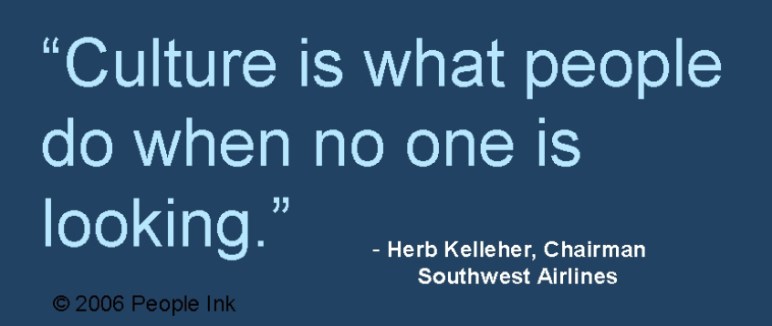
Every business has a culture. Usually the culture begins as an extension of the owner/founder.  The business takes on the personality of the founder; their attitudes, policies, actions and beliefs. As a company grows, these personality traits define the business and how it operates. These legacy actions etc. may actually be getting in the way of business performance.

What is “business culture” and how does it impact your business? In the words of anthropologist E.B. Tylor, culture is “that complex whole which includes knowledge, belief, art, morals, law, custom and any other capabilities and habits acquired by man as a member of society.” In more contemporary terms, culture is the beliefs, actions and behaviors that define how a company interacts with its employees, customers, suppliers and stakeholders.  Your organization’s culture is important because it directly reflects what the organization finds important and meaningful.

Unfortunately, when someone starts a business they usually do not make the time for long term strategic planning.  As a result, the organizations grows in a somewhat haphazard manner. The organizations policies and procedures evolve as situations arise and need to be dealt with.  Very few business owners or managers actually plan their growth (tough to do even in the best economic conditions) nor do they define their organizational culture. Employees then get hired as needed without consideration for how they fit into the culture.

The result is an organization with a haphazard set of actions, policies, beliefs and routines that may not communicate the true organizational vision.  For example; the business can’t claim they place an emphasis on good customer service while at the same time not providing employees with the resources necessary to  provide that service. This conflict between stated ideals and actual practices creates a conflict for employees and impacts how your customers view your business.

The start of any customer service improvement plan is to define your organization’s culture. How do you determine what your organizational culture looks like? Take a good look around your organization, observe employee interactions, look at how tasks are accomplished; what’s important and what isn’t. Take notes as you observe the day to day operation of your business. 

Inc. magazine columnist Geoffrey James has a great video on helping you to define your culture. Enjoy! https://www.inc.com/geoffrey-james/steer-corporate-culture.html

A Pending Disaster!

Customer Service Failures

Is there a pending Customer Service failure looming on your business horizon? Like the Titanic, is disaster just ahead, hidden and unforeseen? If you are unaware of the following disaster creating actions or worse, you tolerate them, there is a Customer Service Disaster in your future.

Here are three sure fire ways to a Customer Service Disaster:

  1. Smoke and Mirrors: You make unrealistic claims in your sales and marketing. You make promises you won’t keep just to get people in the door. No, a new suit won’t get you that promotion no matter how good you look in it. That new electronic gadget will not enhance your life and make you more popular. Reality sets in quickly.
  2. Keep it Zipped: Do you notify customers when shipments will be late? If an item they ordered is on back order? The color or size is not available for three weeks? Nobody, especially your customers, wants to be disappointed. When anyone expects their order to arrive on time and be correct your business looses credibility when it fails to deliver. This again is making promises you have no intention of fulfilling.
  3. Hear No Evil: When we as consumers are disappointed in a product or service we usually complain. Is your business listening? Failing to quickly respond to complaints, or worse yet ignoring them, sends a message to your customers: You are not important!

Any one of these issues will lead to reduced customer retention and a poor reputation. Two or all three of these actions will probably put you out of business!

Getting new customers is difficult and expensive, keeping existing customers is cheaper and more profitable. Review your marketing, communication and complaint handling to forestall a Customer Service Disaster.

For more information on improving your customer service visit: www.customerserviceimprovement.com

Step 8: Celebrate!

Develop a system for rewarding employees for great customer service.

Spend time developing suitable rewards and acknowledgements, nothing fancy just something fun.  I recommend acknowledging employees publically within the organization. Let everyone know, tell the story!

Celebrate milestones.  Whatever milestone or target you establish, celebrate the accomplishment.  Set your customer service improvement goals to be achievable but also require your staff to stretch a little to get there. In other words, make the goal attainable but not to easy. 

More than money, employees crave recognition.  So, celebrate a job well done! 

I hope you have enjoyed this series on Customer Service Improvement. For a complimentary discovery session on improving your business, click the link. http://www.customerserviceimprovement.com

Step 7: Leadership

Owners and managers must fully support the Customer Service Vision. Your every word and action communicates your commitment to providing the best customer service possible. 

Leadership involves not only creating the Vision, which you did in step 2 but communicating the Vision as in step 3.  Leadership also includes inspiring others to embrace the vision and make it work. Providing front line staff with the tools needed (training, step 4), effective hiring (step 5) and the freedom to work independently and make decisions (empowerment, step 6) are all part of being an effective leader. But there is more you can do.

The Vision must be referenced as often as possible, When you speak about a customer, regardless of how you actually feel about them, you need to keep your Vision firmly in mind.  Be sure your words reflect the ideals of the Vision.

The Vision should be referenced at employee reviews.  Employee reviews are a good time to discuss the Vision and ask how the employee embodies the Vision on a day-to-day basis. Reference the Vision when praising overall performance and areas that need attention. Referring to the Vision during employee reviews keeps the ideas and ideals embodied in the Vision at the forefront of everyone’s thoughts and has the added advantage of  re-establishing its importance.

Use the Vision as a guide in decision making. Employees will notice if decisions you make align with the Vision. Your credibility and employee adherence to the Vision are impacted either negatively or positively by your or your manager’s actions.  The quickest way to undo all the work you put into the Customer Service Vision is to not follow it. 

While step 7 in entitled Leadership, it is really more than a single step. Leadership is a continuing, ongoing aspect of your customer service improvement plan. As a leader, you need to continually talk to and about the Vision, refer to it in inter-organizational communications and work it into your marketing. The more you as a leader communicate the Vision the greater impact you will have on improving customer service and the overall profitability of your company.


Step 5: Hiring

Hiring to fill front line or customer contact staff positions has always been difficult. Potential candidates must at least have a pleasant personality and possess good verbal communication skills. But shouldn’t they also possess teamwork and problem solving skills?

When assessing potential new hires, you now have another tool with which to evaluate candidates.  That tool: The Customer Service Vision. You want to use the Vision to gauge whether or not a candidate can embrace the Vision and what it means. 

Just as you created stories and role played during staff training, do the same during the interview process. The story does not need to be as detailed as the training material, just enough to ascertain the candidates mind set.  If the candidate works in a customer service position, have them relate some of their experiences. Be especially aware of their body language and choice of words while describing their experiences. 

Southwest Airlines developed a series of questions to determine the “fit” of a potential hire against their Vision, you can do the same.  Work with existing staff and your own experience with customer service (both good and bad) to develop a few key questions to help you establish a good “fit”.

Here is a tip, when you receive great or better service from someone’s staff, hand them a business card.  Tell them you are always looking for good people if they should ever choose to change their employment, Turn your everyday interactions into defacto job interviews.  You just might find your next super star employee.

Step 6: Employee Empowerment

What is employee empowerment? HRZone (www.hrzone.com) defines employee empowerment as “… a management strategy that aims to give employees the tools and resources necessary to make confident decisions in the workplace without supervision. “  So what does this mean to you and your organization and how does it relate to your Customer Service Vision (CSV)?

Front line staff needs not only the freedom to make decisions in the execution of their assignments but they also need management to support those decisions,  They need an environment that supports independent decision making within established guidelines. For example a CSR needs the flexibility to ship a replacement part overnight rather than the prefered 2-day delivery if she feels the situation requires immediate action,  

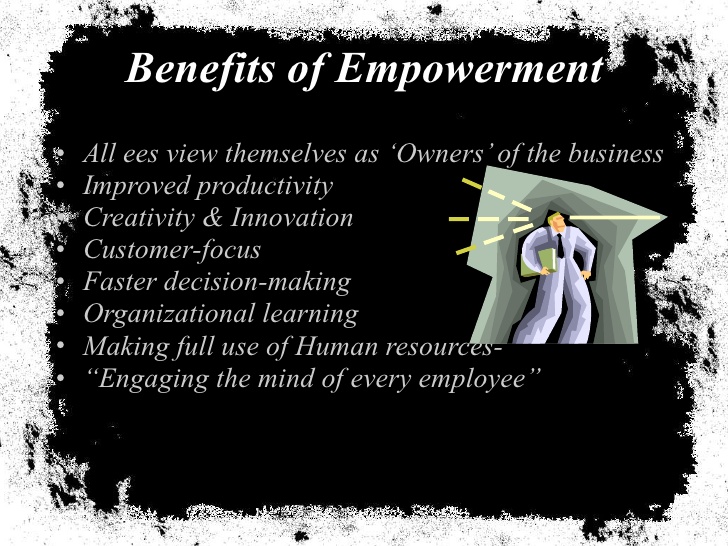
There are some tangible benefits to empowering your employees: greater job satisfaction, improved workflow, greater motivation and increased accountability.

There are some drawbacks to empowerment you should consider. Greater autonomy can lead to risk taking as employees begin to redesign procedures and practices and there is some security risk with the dissemination of important information required for independent decision making.

Empowering your employees, while coming with some risk, will benefit your organization. The combination of more satisfied and productive employees coupled with greater customer satisfaction is bound to improve your bottom line.

Check out this video on actual and psychological empowerment by customer service expert Adam Toporek.

Step 4: Training

Have you ever tried to purchase a good or service and the sales person did not know that product or service at a deep level?  Frustrating isn’t it? How can an organization sell their product or service when their sales/support staff don’t know or understand what they sell or support?  It seems like a no brainer for sales/support staff to really know what they are selling or supporting. Sadly, this is not always the case.

Your staff members who have contact with customers need to have extensive product knowledge. They must be able to explain the product or service in detail, answer questions, even some technical ones and make recommendations for another product or upgrades to an existing product. 

Your staff needs more than just product/service training, they also need soft skills training.  Not every staff member communicates as effectively as they should, a few don’t really listen and still others lack empathy. Support staff especially must have the ability to solve problems and remain diplomatic in trying situations.  Essential soft skills for every sales/support person include:

  • Communication skills: active listening, good verbal communication, good written communication including proper grammar and punctuation.
  • Emotional Intelligence: empathy, self-motivation, self-regulation, positive attitude.
  • Conflict resolution: diplomacy, accountability, empathy, assertiveness, humor.

Your organization will benefit from a well trained sales/support staff with increased sales and improved customer satisfaction.  Training is an investment in your people and your organization.  For a list of FREE training resources, go to: www.customerserviceimprovement.com and click on Free Resources.

Step 3: Spread the Word (Communicating the Vision)

You’ve collected the relevant documents, gathered input from employees and then spent hours writing a Customer Service Vision statement.  Now what?

Communicating your Customer Service Vision is your next step.  As you develop the roll out keep these points in mind: your staff needs to understand what the Vision is, what it means to the organizations, how they as individuals can contribute and what is expected of them as employees. 

Include relevant examples, perhaps review a recent service failure. Ask your staff how they would use the Vision to achieve a better outcome for the customer.  

Stories are a great vehicle for learning new concepts. Create a story that illustrates how to use the Vision to solve complex problems or high maintenance customers.  Make your story as rich and full, as well as relevant, as possible. Your efforts will help ensure your staff fully understands the Vision and its implementation.

Role playing is another great strategy for communicating the Vision. Role play a particularly difficult or demanding customer. Have employees play the part of the customer while another employee works to resolve their issues, concerns or product usage questions.

 Post the Vision where it can clearly be seen like employee break rooms or near the time clock. Communicating the Vision does not end here, this is only the beginning. The Vision needs to be constantly re-enforced, the post on Leadership will address this concept more fully.